Autistic masking, or camouflaging, is something we often do to survive in a world that doesn’t fully understand us. It’s a process of consciously or unconsciously suppressing or modifying our autistic traits to fit the norms and expectations that society has set. This survival tactic is something that many of us—especially those of us who have spent most of our lives undiagnosed—feel we must engage in to simply exist without fear of rejection or harm. And while it might help us navigate neurotypical spaces with less friction, the toll it takes is immense—mentally, emotionally, and physically.
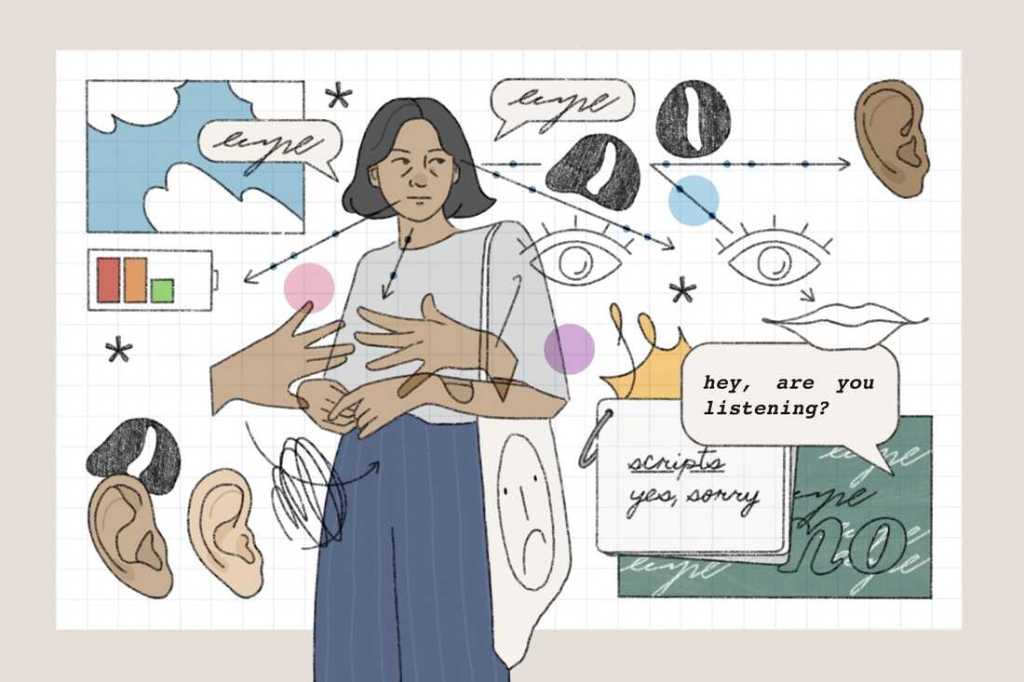
When we mask, we mimic behaviours we’re told are “acceptable”. We suppress stimming—the movements or sounds we make to help us regulate our sensory systems. We learn scripts for social interactions, memorising phrases or cues to seem more “normal”. Research by Hull et al. (2017) explains that masking typically involves three core components:
- Compensation—developing strategies to cope with social situations, like making eye contact or rehearsing what we’ll say next.
- Concealment—actively hiding the traits that make us different, the traits that are seen as unacceptable or “wrong.”
- Assimilation—trying to blend in, imitating the behaviour, language, or demeanour of those around us, pretending to be just like them.
The reasons behind masking are deeply rooted in societal attitudes and personal experiences. Many autistic individuals feel the need to mask to avoid stigma, bullying, or exclusion. For some, masking begins in childhood as a learned response to being told us natural behaviours are unacceptable or inappropriate. It becomes a survival mechanism, allowing us to fit into environments that might otherwise reject or misunderstand us.
But here’s the painful truth: sometimes, masking isn’t a choice. In environments where unmasking could lead to judgment, discrimination, or worse, it becomes necessary for our very safety. Workplaces or social settings, which may have little understanding of autism, can penalise us for things like being direct in communication or having sensory needs. In these spaces, the risk of unmasking is overwhelming. The need to protect ourselves outweighs the desire to be authentic. So, we mask to stay safe, to avoid harm, to avoid being rejected outright.
Masking can be even more challenging for individuals who are both autistic and Black, Indigenous, People of Colour (BIPOC), as they face the intersectionality of racism and ableism. BIPOC individuals may experience heightened scrutiny and prejudice when unmasking, as societal biases often perpetuate the stereotype that they are more dangerous or threatening. For example, studies have shown that Black individuals, especially men, are more likely to be perceived as aggressive or violent, even when they are not displaying aggressive behaviour (Malone, et al., 2022). This can make unmasking especially risky for autistic BIPOC individuals, as they are not only navigating the challenges of neurodiversity but also the added threat of racial profiling and discrimination. These societal prejudices may cause BIPOC individuals to mask even more rigorously to avoid being unfairly judged or targeted. They may feel forced to adapt their behaviour and suppress their true selves to navigate spaces where they may already be seen as “other” because of their race. This can have severe consequences on their mental and emotional well-being, as the pressure to mask both their neurodivergence and racial identity often leads to heightened stress, anxiety, and burnout. As with other marginalised groups, unmasking for BIPOC autistic individuals can be a dangerous act when the broader society lacks the awareness or understanding to recognise and accommodate their needs, potentially putting them at risk of harm, discrimination, or exclusion.
And it’s not just about survival. It’s also about expectations tied to gender. Research shows that autistic women and nonbinary individuals often mask even more frequently due to societal pressures to conform to gendered expectations of sociability and communication (Cook et al., 2021). As Dr. Devon Price writes in Unmasking Autism, masking starts early for many of us, particularly those who are undiagnosed or unsupported. It’s a survival mechanism that often goes unnoticed, but its impact is devastating.
The longer we mask, the deeper we dive into “autistic burnout.” This isn’t just tiredness—it’s an all-encompassing exhaustion that strips us of our ability to function, to connect, to even recognize ourselves. It’s a mental, emotional, and physical collapse, marked by sensory overload and an intense disconnection from the self. For many of us, burnout feels like we’ve been running a marathon for years without a chance to rest.
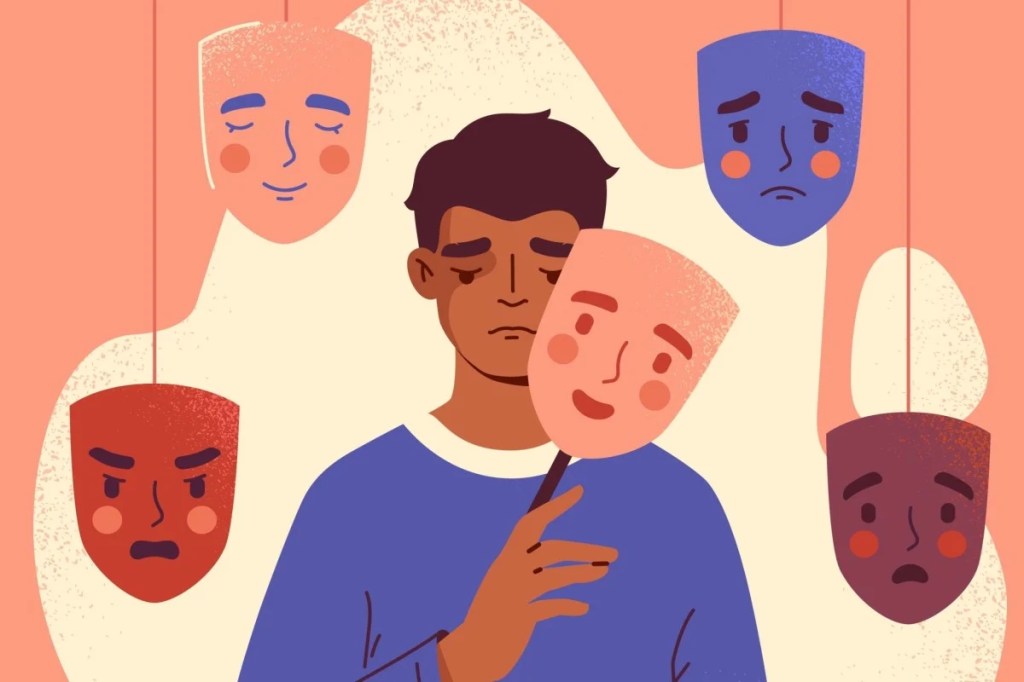
Masking can also damage our relationships. It’s hard to build meaningful, lasting connections when the person we’re showing the world isn’t truly us. We become skilled actors in our own lives, but it’s a role we can’t keep up forever. The dissonance between how we present ourselves and who we truly are often leads to feelings of isolation, even in spaces that seem supportive.
Dr. Damian Milton’s “Double Empathy Problem” theory helps explain this. The communication difficulties between autistic and neurotypical individuals don’t stem from a deficit in us—they arise from a mutual lack of understanding. We mask because we’ve been taught that neurotypical comfort is more important than our own authenticity. But in doing so, we bury who we really are, and that comes at a profound psychological cost. The constant need to meet others’ expectations over our own can lead to anxiety, depression, and burnout—a cycle of harm that we are often forced to endure.
“For us, masking is both an adaptation and a prison”
We need a world that allows us to unmask without fear of rejection or harm. We need spaces where we don’t have to perform a role to be seen. This is why the neurodiversity movement is so important—it challenges society to move beyond rigid norms and embrace neurodivergent traits. We need environments that allow us to thrive, to express ourselves without fear of being misunderstood or judged.
In professional settings, this means creating spaces that are flexible and understanding of sensory needs, where neurodiversity is normalised. It means providing accommodations that allow us to be ourselves—without the pressure to hide who we are. It also means amplifying the voices of autistic advocates and scholars, like Dr. Sarah Hendrickx and Dr. Wenn Lawson, who can help shift public perceptions and foster societal acceptance. When we hear from those who live with autism, we begin to understand the cost of masking and the need for spaces where we can be authentic, where unmasking is not an act of defiance but a celebration of who we are.
Autistic masking in adulthood isn’t just a personal struggle—it’s a societal issue. It’s a reflection of the tension between who we are and what the world expects us to be. The consequences of masking may seem invisible on the surface, but they are deeply felt. As a society, we need to move away from forcing autistic individuals to conform to neurotypical norms. Instead, we need to build a world that values neurodiversity and embraces us for who we truly are. Because for those of us who have spent years hiding, unmasking isn’t just a personal victory—it’s a declaration of existence. It’s a reminder that we are here, that we matter, and that we deserve to be seen for the full, authentic beings that we are.
 Spectrum Spark
Leave a comment